The death of Venezuelan President Hugo Chávez reminded of a documentary I saw years ago… and one, thanks to someone posting it to YouTube, people can see: The Revolution Will Not Be Televised
A documentary film crew happened to be filming Chávez during the April 2002 coup d’état, that removed him from office for two days.
I believe I was still in El Salvador, working for La Prensa Gráfica, when this all happened or recently moved back to the U.S.
HACK n.
1. Originally a quick job that produces what is needed, but not well.
2. The result of that job.
3. NEAT HACK: A clever technique. Also, a brilliant practical joke, where neatness is correlated with cleverness, harmlessness, and surprise value. Example: the Caltech Rose Bowl card display switch circa 1961.
4. REAL HACK: A crock (occasionally affectionate). v.
5. With “together”, to throw something together so it will work.
6. To bear emotionally or physically. “I can’t hack this heat!”
7. To work on something (typically a program). In specific sense: “What are you doing?” “I’m hacking TECO.” In general sense: “What do you do around here?” “I hack TECO.” (The former is time-immediate, the latter time-extended.) More generally, “I hack x” is roughly equivalent to “x is my bag”. “I hack solid-state physics.”
8. To pull a prank on. See definition 3 and HACKER (def #6).
9. v.i. To waste time (as opposed to TOOL). “Watcha up to?” “Oh, just hacking.”
10. HACK UP (ON): To hack, but generally implies that the result is meanings 1-2.
11. HACK VALUE: Term used as the reason or motivation for expending effort toward a seemingly useless goal, the point being that the accomplished goal is a hack. For example, MacLISP has code to read and print roman numerals, which was installed purely for hack value. HAPPY HACKING: A farewell. HOW’S HACKING?: A friendly greeting among hackers. HACK HACK: A somewhat pointless but friendly comment, often used as a temporary farewell.
[The word HACK doesn’t really have 69 different meanings. In fact, HACK has only one meaning, an extremely subtle and profound one which defies articulation. Which connotation a given HACK-token has depends in similarly profound ways on the context. Similar comments apply to a couple other hacker jargon items, most notably RANDOM. – Agre]
Before I created and focused on the @webjournalist account, I had – and still have – a “personal” Twitter account named after my original domain name: @isoardotnet.
Since Twitter archives were being released, I recently went back to look at my first tweets.
Overall, like now, I talk about work and experimenting with technology… I remember sending my second tweet via txt tweet using my Motorola Razr. I remember being disappointed and wondering what the point of Twitter was.
What I didn’t remember was that I live-tweeted my son’s birth:
Well, here we go – we think. Connie has begun to have early contractions. Stay tuned.
This started with my EIGHTH tweet ever! Sheesh. It’s amazing to me that I did this… I’m not sure I would do it now, to be honest. I try not to name my son on Twitter, actually.
But, I have to admit, it is incredible to see that this moment was documented.
BONUS: Look at what other historical event I captured on Twitter!
Today, at 6:19 p.m., our parenting dream came true… the circle is complete… Connie and I introduce Nico to Star Wars: A New Hope!
Two stories from today’s show, for me, are made relevant to journalism after running it through my journalistic filter.
Those who know me (or have read past rants) know that newsroom leadership, across the country and regardless of medium or market size, has frustrated me.
The news story about radiologists that invoked the ‘invisible gorilla’ reminded me about this struggle. Years ago, while I was at The Seattle Times, editors were brought into a retreat called Newspaper Next, I believe. (The site no longer exists, but thanks to the way back machine, you can still see it).
This was a retreat that had started popping up in newsrooms across the country, dealing with one central question: How do we pivot and use our existing resources to generate revenue for the newspaper.
Great topic.
During the presentation they played a video that has stuck with me for years since the talk, and which was played this morning on NPR (KPCC is my local NPR station).
I didn’t recall the name, but now know it is called the ‘invisible gorilla.’
While mine was slightly different, here is the video. Play it and follow the instructions.
The logo from theinvisiblegorilla.com is a gorilla reading a newspaper. A newspaper!
So, did you notice the gorilla? Or those other changes? Isn’t that amazing? According to the story and video, 50 percent of people who see this video are so focused on the task at hand that they miss the not-so-invisible gorilla that walks into the frame.
The take away from the video during that newspaper retreat was “are we so focused on newspapers that we are missing the gorilla?” And in newspaper speak, the gorilla meant digital.
A high up editor at the time, after watching the video, said how eye opening the exercise was… me, being a bit of a loud mouth, responded by saying “I’ve been that guy in the gorilla suit. Not only waving my hands, but also jumping up and down.”
Most digital journalists have had this experience.
It’s the culture difference between traditional and, well, digital leadership and competence that is such a challenge. Many of us have dealt with this in a variety of ways.
Which leads me to the second story: The Pope.
In his resignation, Pope Benedict XVI said “I have come to the certainty that my strengths, due to an advanced age, are no longer suited to an adequate exercise of the Petrine ministry.”
In today’s world, subject to so many rapid changes and shaken by questions of deep relevance for the life of faith … I have had to recognize my incapacity to adequately fulfill the ministry entrusted to me,” said the Pope.
I hear that, then tweet this:
https://twitter.com/webjournalist/status/300984652926156800
And then I write this post.
Look, there have been so many changes in newsrooms and its leadership. We are the better for it. But there is still much more to go. And it’s on us to push it forward.
We will have moments when newsroom leaders retire, take buyouts, etc. … and their incredibly valuable newsroom knowledge will be greatly missed… but we have to remember that we are moving — slowly — toward the goal of a modern, well, newsroom.
This is not about age. No. It’s about understanding culture… in this case digital/Web culture.
And these are the things I think about. And occasionally ramble on in a post.
This is perhaps the most meta thing I’ve ever done. I uploaded The Machine Stops, the powerful 1909 essay by E.M. Forster, to SoundGecko, a Web service that converts any text into an MP3, Siri reading.
NOTE: I first read this essay on my iPad and did not miss the irony. So, bonus points of you are listening to this ‘audio reading’ on your mobile device.
When this tech first came out I also pitched the idea of a Google+ Clip Club. It has nothing to do with journalism, but everything to do with watching TV and movies together socially.
So, that’s my new experiment.
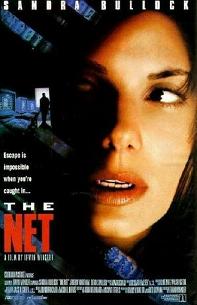
I, and whomever wants to join me, will be watching The Net, a beautifully horrible movie about technology, the Internet and how it can destroy lives.
The movie’s tagline: Her driver’s license. Her credit cards. Her bank accounts. Her identity. DELETED.
Anyway, I’m going to watch the movie and screenshare my desktop via a G+ Hangout… enabling the ‘on air’ feature.
No clue if this will work, or if it will be completely awkward… but I have a few extra hours on my hands, so let’s see how this goes.
NOTE: This movie is so bad I’m not sure I’ll watch it all the way through… BUT the opening sequences that invoke technologies from 1995 are well worth it!
Here’s the trailer:
If I can, I’ll post the G+ Hangout here, or embed it even. But, I’ll be using Talk Journalism with Me page: http://gplus.to/talkjournalism
So, this is a test of Rebel Mouse‘s embedding feature. It’s in beta.
I’m still testing out this service, but basically it’s a reader for all your social media… and with this new embed feature, you can have your social media appear as a front page on nearly any type of CMS/site. Here is my test only using my Twitter feed. (My Facebook is more personal and all about my kid. Instagram is also mainly about my kid, but it is currently public.”
After a lot of work by the university, journalism school, faculty, but, most importantly, students, I am proud to announce the launch of the Ruben Salazar Archive site: http://www.rubensalazarproject.com
As part of an experimental directed research course, led by Félix Gutiérrez and myself, nine students had access to the legendary Los Angeles reporter’s personal archive, which was donated by his family to the university.
These students were among the first at the university to review the items, most was which were unknown to us, as part of the class to try to tell the private story of a public figure.
As the students indexed and digitized the content of these boxes, each one of them identified a story to tell to help bring this historical figure’s past come to life.
The work resulted in this rich site, which includes an interactive timeline (it looks amazing on a tablet).
This thought just occurred to me… so let’s see if I can express it here.
Our industry has experienced many, MANY changes. Obviously.
But one the things I think we tend to forget are the people outside of the newsroom and even the business side.
When was the last time you thought about the printing press operator? The one actually printing the beautiful broadsheet that millions still read. (Yes, millions.)
The people who know how to make the presses sing, carefully printing news and information efficiently… and under their own deadlines.
Those that love — or deal with — the loud roaring sound of the presses.
Those ones that truly get their hands dirty with newsprint.
The real ones who can actually “stop the presses.”
You know, they could be working somewhere else. They, too, know they could get another job where their industry isn’t “dying.”
But they choose to work the presses.
Why?
I bet they feel the same amount of pride working their craft as you feel in yours.
I bet they value their role — albeit one often forgotten, evolving but yet still vital — in helping inform their community.
I bet they are as proud to work for the masthead as the journalists across town.
I bet their chests get broader when they see a powerful headline that will help their community as it blurs fast through the presses… I imagine that they try to print it even faster to get the information to the community quicker. (But without compromising quality.)
They feel the same pain and have the same worries when they see the revenue challenges and face layoffs.
Let’s take this out of print and look toward audio engineers. Or how about those that run the backend equipment that makes the nightly newscast viewable via satellite.
Let’s look at the computers — granted old ones, typically stuck with IE — and the people behind making these crappy things last a little longer to help keep the budget lean.
The IT people that take pride in their work, knowing that they are facilitating the production of journalism. They can probably make more money elsewhere, but stay here because they want to help inform their community too.
How about the Web developer? Coder? Programmer?
They can make a ton of money elsewhere.
So can you… P.R. is right there. All companies are now media companies and they need help telling their own stories.
These are great, honorable jobs. But you, like the others, stay.
Look, we are all “suckers.”
Suckers because we believe in journalism, in informing our community, in doing the best we can with the resources we’ve got… on deadline. And we do it all while working long hours and being underpaid.
But we can’t imagine doing anything else.
These are all different crafts. All to be respected. All to be valued.
Just a thought.
// State of Play
The closing credits of the journalism thriller, State of Play, is all about the printing of the paper. It’s a great homeage to the process. I captured the final frames because I loved their CMYK moment that passes in a blink of an eye. Here it is slowed down,

 When this tech first came out I also pitched the idea of a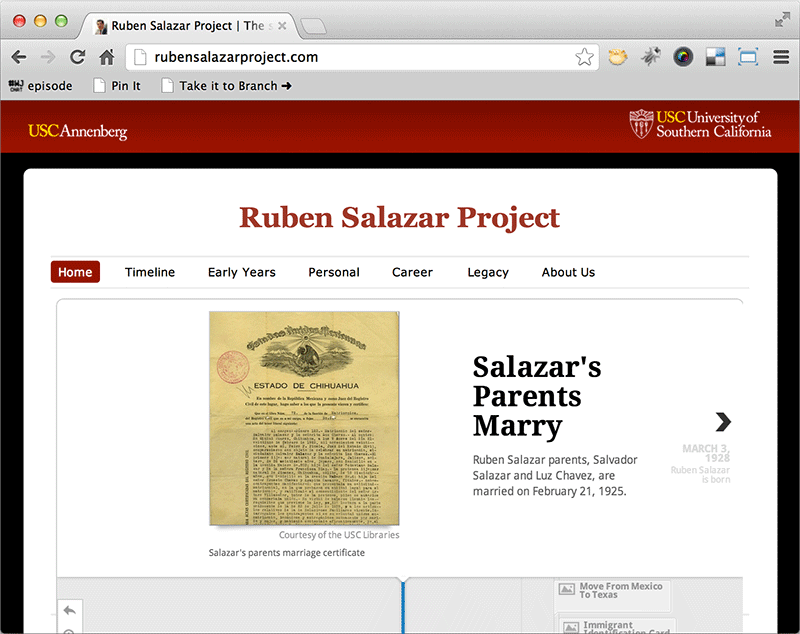
 This thought just occurred to me… so let’s see if I can express it here.