Archive

Archive for the ‘Personal’ Category
28 Mar

A plea: Why you should not leave journalism

This isn’t a post defending why I love journalism. Nor is it one condemning those that have left it.

This post is a plea.

This morning I saw a tweet that led me to this sad reality:

A new study finds that, in 42% of companies, low performers actually report being more engaged – more motivated and more likely to enjoy working at their organization, for example – than middle and high performers do.”

That line made me reflect on my life… and the lives of the peers I truly respect. We’re all frustrated and “unhappy.” Well, according to some people.

Why?

Because we are passionate.

Because we are not satisfied.

Because we know what it could be, which is so much more than what it currently is.

And we’re fighting for it. It’s a struggle… but we do it.

In many of my peers’ careers, including mine, you look around the organization and are in shock.

In shock because while we bust our collective asses in our struggle, others – these “low performers” – have moved up along side us.

They have failed up.

Don’t tell me you can’t immediately think of at least one name in your newsroom right now.

They’ve been there forever. Before you got there and started trying to change things… and quite honestly, they’ll be there after you leave. These people mean well… but they don’t fight for their beliefs like we do.

We – and I am not saying this is healthy – break down in tears from the frustration of our struggle. We question our own value, despite our incredible track records of change and success. We question our life and doubt all the sacrifices we’ve made along the way… even though we’d do it all over again.

But, which is understandable, we burn out. And we leave. Leave the heartbreak. (Or, which happens too, we leave the company for a better one. But we will inevitably be unsatisfied again.)

In all this… we also leave behind those satisfied “low performers” … and that’s how they move up.

Back to my plea.

I know it sucks. I know it is so crippling at times. I know you question the direction of your life. I know you think you are crazy (you must be, right, because no one is freaking out as much as you are). I know all this.

But I also know you are not alone. That you are not crazy. And that we are better off with you fighting for your beliefs.

We are better off with you in journalism – or in what ever industry you are frustratingly passionate about.

Take a break. Make a change. But don’t give up… and don’t you dare get falsely satisfied.

Stay hungry. I know it hurts sometimes, but stay hungry.

When you have doubts, look to your passionate peers. Remember Horizontal Loyalty. Re-read the Holstee Manifesto. And, occasionally, watch videos like this or this.

But stay. And make the difference.

PS: Please read this back to me if/when you see me doubting/questioning myself. Please.

12 Mar

Learn Code Project: A year ago…

Comments off

It was about a year that I was boarding my plane headed back to the West Coast, recharged and inspired by SXSW12.

By the time I landed, I had coded and launched this new project.
learncodeforjournalismwithme-logo-thumbnail
Man, what a difference a year makes.

Frustrated (and starting to get desperate) with finding partners to collaborate/experiment with, I figured I should put off the inevitable and teach myself code. I know I wouldn’t be the best coder — like I’m not the best audio storytelling or photographer — but I respected the craft and know its power.

I had been director of development for seattletimes.com where we designed and built cool shit, which was ahead of its time… and now feels… so… quaint.

In my quest for dev skills, I tried a variety of different non-journalism, code classes… from video to web-based tutorials. I, as ONA pre-conference and NAHJ conference coordinator, recruited friends and colleagues to craft custom journalism focused all-day coding workshops.

I even offered a (nearly free) all-day, intro to Python bootcamp at USC Annenberg thanks to the awesome PyLadies.

For the record, while this benefited the community as a whole, I was doing it for me. And none of it worked… for me.

But after SXSW, inspired by Codecademy‘s Code Year (even though I had given up on it like other New Year’s resolutions) and a curious user of Google+ Hangouts, I created the Learn Code for Journalism with Me project.

Yes, it’s a loooooong name. My partner-in-crime Kim Bui openly hates it. I know.

But it comes from a series of projects I’ve hung around the domain journalismwith.me.

Anyway, the idea was a simple one and the reaction to it was overwhelming. I was clearly on to something… and I wasn’t the only one trying to solve this.

Cindy Royal of Texas State University was trying to build a curriculum, Dave Stanton (who was joining two other friends and myself in launching a cooperative consulting firm) had expressed interest and I’m sure others were trying to grapple with this issue.

But, again, what a difference a year makes.

As I wait for my plane to take me back to the City of Angels still recovering from SXSW13, the landscape for this has completely changed.

There are two projects I want to point out:

First is Sisi Wei‘s Code with me project that offers weekend coding bootcamps for about $85.

Second is For Journalism, the successfully-funded kickstarter from Stanton, which will create journalism-focused coding tutorials.

Outside giving money to For Journalism and being a cross-country supporter of Code with me, I had nothing to do with their launches.

Even if their project names sound familiar, as people have point out … to be fair, my loooong title clearly had all the right words required for any successful coding for journalism project aimed to empower the community.

For my little project that is reaching its year anniversary, I didn’t have the bandwidth to make tshirts to use crowd funding.

It was just me.

Actually, it’s not just me anymore.

It’s me and my amazing cohort of determined classmates-turned-friends that still meet every Monday at 3PM PT via Google+ Hangouts since April of last year.

We’ve abandoned Code Year and have been developing our own journalism-based, project-focused coding lessons. We’re teaching each other code and hoping to share what we learn with others.

You can hear about the LCFJWM phase 2 in this View Source podcast interview or read about what I’ve learned in this post.

What a difference a year makes. And I am so glad talented people have come into this mix and found ways to address this need… in ways I couldn’t have for lack of the bandwidth or connections.

God only knows what the next year will bring, but we all know we’re going to benefit from this work.

05 Mar

Documentary: The Revolution Will Not Be Televised

Comments off

The death of Venezuelan President Hugo Chávez reminded of a documentary I saw years ago… and one, thanks to someone posting it to YouTube, people can see: The Revolution Will Not Be Televised

A documentary film crew happened to be filming Chávez during the April 2002 coup d’état, that removed him from office for two days.

I believe I was still in El Salvador, working for La Prensa Gráfica, when this all happened or recently moved back to the U.S.

NOTE: This isn’t the first time I’ve posted about Chávez. I wrote about him when he first joined Twitter nearly three years ago: Hugo Chávez selects his weapon of choice for Twitter

23 Feb

My first tweets: live-tweeting my son’s birth

Comments off

Before I created and focused on the @webjournalist account, I had – and still have – a “personal” Twitter account named after my original domain name: @isoardotnet.

Since Twitter archives were being released, I recently went back to look at my first tweets.

Overall, like now, I talk about work and experimenting with technology… I remember sending my second tweet via txt tweet using my Motorola Razr. I remember being disappointed and wondering what the point of Twitter was.

What I didn’t remember was that I live-tweeted my son’s birth:

This started with my EIGHTH tweet ever! Sheesh. It’s amazing to me that I did this… I’m not sure I would do it now, to be honest. I try not to name my son on Twitter, actually.

But, I have to admit, it is incredible to see that this moment was documented.

BONUS: Look at what other historical event I captured on Twitter!

NOTE: I first posted this discovery on Facebook, but I also want to “document it” on my blog… for future reference.

Categories: Personal, Social Media, Twitter Tags:
03 Jan

E.M. Forster’s The Machine Stops ‘read’ by SoundGecko

Comments off

This is perhaps the most meta thing I’ve ever done. I uploaded The Machine Stops, the powerful 1909 essay by E.M. Forster, to SoundGecko, a Web service that converts any text into an MP3, Siri reading.

NOTE: I first read this essay on my iPad and did not miss the irony. So, bonus points of you are listening to this ‘audio reading’ on your mobile device.

18 Nov

My latest G+ Hangout experiment: Watch it with me

Comments off

So, ever since G+ Hangouts came out, I’ve written and talked about different ways of using it… some of my projects include Learn Code for Journalism and the short-lived (but I hope returning) Talk Journalism with Me vodcast.

When this tech first came out I also pitched the idea of a Google+ Clip Club. It has nothing to do with journalism, but everything to do with watching TV and movies together socially.

So, that’s my new experiment.

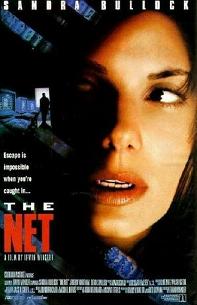
I, and whomever wants to join me, will be watching The Net, a beautifully horrible movie about technology, the Internet and how it can destroy lives.

The movie’s tagline: Her driver’s license. Her credit cards. Her bank accounts. Her identity. DELETED.

Anyway, I’m going to watch the movie and screenshare my desktop via a G+ Hangout… enabling the ‘on air’ feature.

No clue if this will work, or if it will be completely awkward… but I have a few extra hours on my hands, so let’s see how this goes.

NOTE: This movie is so bad I’m not sure I’ll watch it all the way through… BUT the opening sequences that invoke technologies from 1995 are well worth it!

Here’s the trailer:


If I can, I’ll post the G+ Hangout here, or embed it even. But, I’ll be using Talk Journalism with Me page: http://gplus.to/talkjournalism

29 Sep

Ode to the printing press operator (and many others)

This thought just occurred to me… so let’s see if I can express it here.


Our industry has experienced many, MANY changes. Obviously.

But one the things I think we tend to forget are the people outside of the newsroom and even the business side.

When was the last time you thought about the printing press operator? The one actually printing the beautiful broadsheet that millions still read. (Yes, millions.)

The people who know how to make the presses sing, carefully printing news and information efficiently… and under their own deadlines.

Those that love — or deal with — the loud roaring sound of the presses.

Those ones that truly get their hands dirty with newsprint.

The real ones who can actually “stop the presses.”

You know, they could be working somewhere else. They, too, know they could get another job where their industry isn’t “dying.”

But they choose to work the presses.

Why?

I bet they feel the same amount of pride working their craft as you feel in yours.

I bet they value their role — albeit one often forgotten, evolving but yet still vital — in helping inform their community.

I bet they are as proud to work for the masthead as the journalists across town.

I bet their chests get broader when they see a powerful headline that will help their community as it blurs fast through the presses… I imagine that they try to print it even faster to get the information to the community quicker. (But without compromising quality.)

They feel the same pain and have the same worries when they see the revenue challenges and face layoffs.

Let’s take this out of print and look toward audio engineers. Or how about those that run the backend equipment that makes the nightly newscast viewable via satellite.

Let’s look at the computers — granted old ones, typically stuck with IE — and the people behind making these crappy things last a little longer to help keep the budget lean.

The IT people that take pride in their work, knowing that they are facilitating the production of journalism. They can probably make more money elsewhere, but stay here because they want to help inform their community too.

How about the Web developer? Coder? Programmer?

They can make a ton of money elsewhere.

So can you… P.R. is right there. All companies are now media companies and they need help telling their own stories.

These are great, honorable jobs. But you, like the others, stay.

Look, we are all “suckers.”

Suckers because we believe in journalism, in informing our community, in doing the best we can with the resources we’ve got… on deadline. And we do it all while working long hours and being underpaid.

But we can’t imagine doing anything else.

These are all different crafts. All to be respected. All to be valued.

Just a thought.

// State of Play
The closing credits of the journalism thriller, State of Play, is all about the printing of the paper. It’s a great homeage to the process. I captured the final frames because I loved their CMYK moment that passes in a blink of an eye. Here it is slowed down,

Categories: Journalism, Personal Tags:
10 Sep

Why I’m running for the ONA Board again

Comments off

ONA logo
There’s more work to be done.

A lot more.

Simply put, that’s why I am running for re-election to stay on the Online News Association‘s Board of Directors.

As I said when I first ran, I believe ONA needs to be the center organization leading and guiding our industry forward. That goal and need is as strong as ever.

A core part of my work — from teaching/training to #wjchat to Learn Code for Journalism to Tech & Tools to Horizontal Loyalty — is in sync with the organization’s mission: empower journalists to move our industry forward.

I’m proud of the work we have done in the last two years with the board. The organization has added more training, offered more scholarships, expanded its programs and has taken important steps to solidify itself as an essential part shaping the future of journalism.

But please don’t think it’s easy.

It takes a lot of work and I am fortunate to work along side with incredibly smart and passionate board members and staffers that give it their all. You have no idea. (If you see them at ONA12, please thank them for their work. Hell, buy them a drink!)

I feel that I contribute to the organization. I bring diversity — culture, age, ethnicity, location and experience — to the group. I bring my Web/tech background and experience to the organization. And I… how do I put this? I’m that guy … that one who asks tough questions to keep us honest and hold us accountable. Some of you saw that with the Patch thing. It was not a fluke. Ask my peers, they see it in our board meetings.

We face other challenges too.

As an organization, we need to find scalable ways that tap into the diversity of our members’ skills/experiences to share them and help them grow.

Web journalism is a broad term. Because we are inclusive, it’s an incredible strength for ONA. But if we don’t take advantage of it correctly, we look unfocused and diluted.

I think ONA needs to be the place that brings the diversity of Web journalism together to grow stronger together… and I’d like to continue to be at the table to make this happen.

Please help shape the future of this organization and journalism by voting.

And, if you think me worthy, please consider voting for me. I’d truly appreciate it.

Thank you,

Robert
Read my bio here

01 Sep

Video: Horizontal Loyalty Ignite talk at Spark Camp

Comments off

For those interested, here is video of my Ignite talk on Horizontal Loyalty. You can see my slides here.

28 Aug

CU-Boulder Hearst Professional-in-Residence

I usually don’t write about things like this, but, I have to admit, this one is pretty cool.

I’m proud to announce that I have been selected to be University of Colorado‘s Hearst Professional-in-Residence.

From their invitation letter:
“The Hearst program is made possible by an endowment from the Hearst Foundation, and its purpose is to introduce nationally known, accomplished journalists to our students to enrich their journalism studies. With your work both as a teacher and as a practitioner in digital news and social media, we can think of few people better qualified to play this role.”

As many in the academic community know, the Journalism school has gone through some serious challenges. They still have a journalism program and, like most programs, are re-building.

I’m honored that they’ve asked me to join them in the conversation.

I’ll be there September 27 and 28.