12 Jan

CES2019: Pivot to XR

Posted by Comments off

As Editor at Large for Immersive Shooter, I went to the annual tech conference in Las Vegas, CES, to explore what new technologies will be coming to market and potentially disrupt the immersive industry.

This year, I noticed a change — moving from 360 to XR.

Here is the article I wrote for Immersive Shooter: https://www.immersiveshooter.com/2019/01/12/ces2019-pivot-to-xr/

10 Dec

Racists and sexists get replaced

Posted by Comments off

Nieman Lab. Predictions for Journalism, 2019
https://www.niemanlab.org/2018/12/racists-and-sexists-get-replaced/

Whether you’re carrying tiki torches or saying “we just can’t find qualified women or people of color,” we see you. And we will replace you.

If you have said something racist, sexist, homophobic, xenophobic in a professional setting — whether being at work, an industry event or listserv — but don’t see it as a big deal…we see you. And we will replace you.

If you keep confusing the two black interns’ names or the two Asian reporters’ names, especially when you congratulate (the wrong) one for their work…we see you. And we will replace you.

If you think the only way to diversify your staff is through fellowships that underpay the employee — while they do equal work, under a contract of one, two, or three years — with the false promise of maybe hiring them full-time at the end, we see you…and we will replace you.

If you have said, “Well, we have one woman on this panel” (chances are she’s the moderator) and think that’s enough…if you said, “Hey, we did good, we have 30 percent women speakers. That should be enough”…we see you. And we will replace you.

“They get too much coverage.” “We have too many already.” “How many is enough?” “We’ll look into it.” “Why do they get special treatment?” “They should be happy just being here.” “Why can’t they take a joke?”

We see you. And we will replace you.

There is an unstoppable wave of talented, diverse people that believe in the value of inclusion that is about to crash down on our industry — every industry.

We have played by your rules. Gone to your schools. Done your internships and fellowships. Applied for jobs. Asked for promotions. Waited in line, waited for our turn…only to be passed over and ignored.

Instead of letting you burn us out and following the many that left this industry, this wave has decided to drown you out.

We know that to succeed we have to play by our own rules. Rules that don’t change for “a better fit” and are based on the same core values that define us all as journalists.

We have become allies. We have become partners. Mentors. Influencers. Entrepreneurs, starting our own organizations. Leaders — in classrooms, newsrooms, and boardrooms.

If you haven’t heard of this wave, be warned. Either join us for parity and inclusivity or get out the way.

Now, if you’re offended by this, take a moment to reflect.

I didn’t call you out. You just did.

And we will replace you.

Categories: Nieman Lab Predictions
Tags:
22 Jun

5 ways to have immediate impact on your industry

Posted by Comments off

NOTE: I quickly wrote up this post right before a flight and haven’t really copyedited yet.

Diversity and inclusion is a challenge that often feels like an overwhelming problem that we, as individuals, don’t seem to have the influence or resources to tackle.

We commonly say “I’m not hiring” or “I don’t have money to make an impact” and all these may be true.

But, as SXSW opens PanelPicker, CES calls for speakers, and conferences like NAHJ18 and ONA18 are quickly approaching, I wanted to share some practical things YOU can do to make a difference.

  1. Pitch a session! There is a difference between those on stage and those sitting in the audience, and often it’s not the level of expertise. It’s about who took the time to fill out a form and who didn’t. You are qualified to be on a panel about something you are genuinely passionate about. Invest some time to fill out a form increase the likelihood of unlocking some financial support to attend the industry conference, ranging from registration to travel and lodging.
  2. But don’t make your session about diversity. I have been on countless of diversity focused panels, typically presented to a nearly empty room. My most recent one was at SXSW and that will be my last “diversity” panel. My new approach, and one that I recommend to you, is to be on the leading topics of our industry. I – like many of women and people of color – are qualified to be on panels besides the topic of diversity. And being on non-diversity related panel helps normalize that women and people of color are naturally among the experts about the topic. And, let’s be real, more people will attend a non-diversity related panel.
  3. Recruit a reflect panel. If your session was selected, make sure your panelists are representative of our diverse community. Do you best to include panelists from diverse backgrounds to debunk any stereotypes. Don’t only think about gender, ethnicity and sexual orientation, but think geography, size of their organization, skill/experience level, etc. The panelists should not look all like you or share your background.
  4. Panelist rather than organizer. If you aren’t the organizer, you still have some influence about who is participating in the session. Ask how diverse the panelist group is and offer to recruit someone qualified that also looks different from the rest of the panel. Often you are help the organizer out. If it is all male, I really encourage you to give up your spot and recruit a replacement that reflects diversity. This simple and powerful step really amplifies others.
  5. Give away your registration. If you are employed, I highly encourage you to ask your employer to pay for your conference related expenses. And, if the conference is offering to cover your expenses STILL HAVE YOUR EMPLOYER pay. And giveaway your conference – and possibly the other resources – to someone else. Look, they were going to pay anyway and they were going to comp you anyway… why not pay it forward to someone who needs help. Everybody wins.

I have done each of these – multiple times for years. I have no money. I have a kid to fund. I am not hiring anyone. But these simple ways can have large impact.

If you truly care about inclusion and diversity in our industry – or any other industry – try a few of these tips to help make a real impact.

Please let me know if you have other tips and if you have done these too. We have more influence than we think.

24 May

Running for NAHJ’s Academic At-Large Officer

Posted by Comments off

I am a product of NAHJ.

Since I first attended the Student Campus when I was in community college to planning the curriculum for this year’s conference in Miami. I have run the Student Online Project for more than five years, help organize what was then called the “New Media Tracks” and served on the board for a few years.

And after much thought, I have decided to throw my name into the race to be the Academic At-Large officer serving on the national board.

tl;dr version:
I need your help. If you are an NAHJ member in good standing, please email this nomination statement to elections@nahj.org and r.hernandez@usc.edu. Thank you!

SUBJECT: Robert Hernandez, Academic At-Large Officer

I [Nominating Member Name], an employee of [The Company the Nominating Member Works for and Their Position] support the candidacy of Robert Hernandez for Academic At-Large Officer in the election of the NAHJ Board of Directors.

This statement counts as my virtual signature and I have included my full contact information below.

Date:

Phone:

Email:

The long version:
First, I have to admit I normally preach about new leadership to head up organizations like ours because we need to evolve and change to reflect the world we work and live in. We need modern leaders for these modern times. Not the same old talking points and passive organizations from years past. Why look back when we need to move forward?

Because of that thinking, I was reluctant to serve on the board again. Why should I return when there should be new faces that can lead?

Robert-Hernandez-Board-picSo much has changed in my career since I served. In all honesty, I feel like I was a kid when I was first on the board, trying to normalize the digital’s role in journalism just over 10 years ago. That sounds crazy, but that was the struggle for journalists working online.

Now, after two decades in this industry, I think we need bold leadership that delivers on empowering our members. We can’t complain about the lack of diversity. A hashtag is not enough. We have to empower ourselves, because we are the ones who will fight for us and for inclusion.

I think the training I have organized for our conference is in line with the changes and the direction we need to go in.

I think I do bring a perspective that NAHJ needs.

And, I’ll be honest, if the bylaws allowed it…. I’d be running for president of NAHJ this year.

Our bylaws are out of date. You don’t get corrupted by taking a different type of media job. Once a journalist, always a journalist. Once a passionate member of NAHJ, always a member of NAHJ.

People who know me know that I am a reluctant academic. I am more a hackademic. But if that is the only spot I can run for to serve on the board, then so be it.

I stand with NAHJ.

Just as NAHJ has stood with me. Throughout my entire career adult life.

I hope you vote (our turnout rate is horrible!)… and you consider voting for me to continue to serve NAHJ.

Gracias,

Robert

Categories: Diversity, NAHJ
Tags: , , ,
15 Dec

History will exclude you, again

Posted by Comments off

Nieman Lab. Predictions for Journalism, 2017
https://www.niemanlab.org/2016/12/history-will-exclude-you/

If you follow me on social media, or have read my past predictions, you know that I fully believe we’re heading toward the next disruption: immersive journalism.

I am proud to say last year’s prediction — which included news organizations partnering up with academic institutions to produce immersive journalism — came true with a collaboration between ProPublica, The Texas Tribune, and USC Annenberg.

My students, under the brand JOVRNALISM, converted their powerful Hell and High Water investigation into an immersive experience called Hell and High Water VR (best viewed via our iOS and Android apps). We’re also collaborating on different projects with CIR/Reveal News, The Desert Sun and many others — stay tuned!

But this time around I want to make a slightly different prediction: If we — the diverse community driving this emerging platform — aren’t proactive, VR, augmented reality, and other immersive forms will become dominated and defined by white males.

Nothing personal against my white male colleagues, but the exclusionary narrative that dominates the history of technology is both constant and untrue. Every aspect of technology has been also influenced by women and people of color — but somehow they get left out of the narrative and excluded from leadership roles.

VR has especially been shaped by women and people of color, and, yes, by white men too. Honestly, this is a collaborative and diverse community. It’s a beautiful thing to be a part of. But I’m seeing the return to that exclusionary narrative in this space.

Last week, a VR summit had 96 speakers — only 10 were women.

TEN. (That’s up from last year, I am told, when they had 60 speakers and only one woman.)

I don’t mean to pick on them, and I am sure they will do better next year. But this isn’t the first conference that has done this recently — there’s a history of exclusion in journalism conferences too — and we all know this won’t be the last.

For the record, I don’t think this is a conscious, strategic effort to exclude, but regardless of the reason it cannot happen again. So, I’m asking people to speak up.

I am asking you to speak up.

If you are organizing a conference, make sure half your speakers are women and at least a third of the speakers are of color. Diversity goes far beyond those two demographics as well: sexual orientation, geography, religious, political, and more.

If you’re on a panel that is all men or doesn’t reflect the diverse community, speak up. You have to point it out — before, during, and even after your session.

If you are a member of an underrepresented community and are invited to present but can’t attend, let’s find you a diverse replacement rather than forfeiting that rare and valuable invitation.

Look, whether you want to admit it or not, there is an incredible power and responsibility when you are a presenter at a conference. Standing on stage and presenting, you are an industry expert and influencer. You are defining and shaping the industry. If you aren’t up there, you are just another face in the audience looking up to leaders.

Immersive journalism is happening. That’s not a prediction, it’s a reality. And if we want this to go mainstream, excluding half the population is a bad business move.

Don’t complain after the fact, either. Don’t roll your eyes and pick apart this post. Do something.

You can join the two Women in VR organizations proactively trying to influence the conversation. You can join the countless other groups discussing this medium.

This technology is accessible to everyone, including you. So get on it.

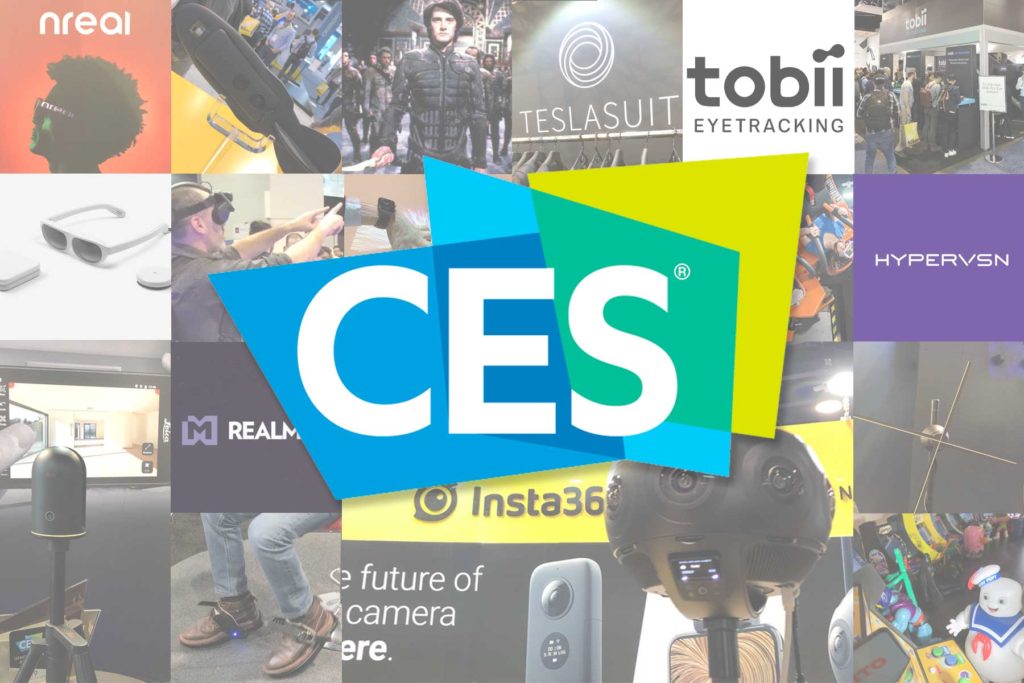
And join the diverse community that looks more like my JOVRNALISM classroom:

My students and I produce JOVRNALISM thanks to Nonny de la Peña, Christina Heller, Thomas Wallner, Julie Young, Brian Chirls, Ray Soto, Sarah Hill, and many others. We wouldn’t be here if it weren’t for them. This whole industry wouldn’t.
Categories: Nieman Lab Predictions
Tags:
01 Feb

The journalists’ (and my) struggle is real

Posted by 1 comment

NOTE: Let’s get this cleared and out of the way. I am not a typical journalist. I don’t have a regular byline nor do I have a media company having to deal with angry voices that value perception more than reality. So, these thoughts are “easier” for me to express than others in our industry. I’ll also add, these are just my thoughts… often thinking, speaking or tweeting out loud as I try to grapple how I fit in the world around me.

BACKSTORY
This wasn’t a new internal debate I’ve been having. In fact, since the middle of the primaries, I’ve been asking myself – and any journalist who would let me bend their ear – the question about how I, or we, as a journalist am feeling about the the tone and coverage as the country began to select the next president.

I, as someone who aims to be an informed citizen, couldn’t tell what was real. I didn’t know what was fact or what was “fake news.”

And, to get this on the record, this concern wasn’t limited to one candidate. In the end, both the Democratic and Republican candidates had some significant flaws that should force any voting citizen a moment to pause.

But, let’s also be honest, one candidate said and behaved contrary to some fundamental beliefs I hold dear. I am unapologetically against racism, xenophobia, sexism, homophobia and anything that leads to discrimination of others.

I, like I believe many people have, have always thought about “what would I have done” if… if there were a robbery, would I be a hero? If I saw police brutality what would I do? And, the ultimate hypothetical scenario, if I were around the time of Hitler, would I do something to speak up and defend the Jews.

I am also a Catholic (although I do not agree with many of the church’s political stance) and this past Sunday’s set of readings really affected me as President Trump’s executive order banning the travel of Muslim immigrants was happening.

All this got me to tweet. Not saying it was a good or bad decision, but here they are with some context.

I keep my faith to myself. I hate preachy people. But I thought there was hypocrisy and discrimination with the Muslim Ban and these readings really called it out.

I then tweeted out quotes from the readings, which I will spare you. But here is Tweet 2, 3, 4 and 5 in the series.

This was the tweet that would spark a Poynter piece about this struggle.

This is the moment where I went off my planned topic and decided to be more open and share my struggle with our current reality.

There were lots of “likes,” retweets and replies, including this one from Joshua Johnson.

This led to an exchange with Katie Hawkins-Gaar of Poynter, who asked if she could use my tweets for a piece she’d write based on this struggle many of us seem to be facing.

That led to this:

I will admit, I was and still am nervous for sharing. I took a risk in exposing myself. So far I haven’t gotten in trouble.

But others aren’t so lucky.

Lewis Wallace wrote about his struggle in this new reality too. But he was then fired from his job at Marketplace.

Clearly I disagree with this move.

I don’t know what the answer is, but I do know this is something we need to discuss and examine. This is happening. This is a reality. This isn’t something we can simply ignore or kick out of our newsrooms. This is the time for journalism to embrace the diversity of perspectives from every side and find a way to factor them into our coverage, ethically and transparently.

This is part of the new journalism, and it’s going to get uncomfortable and messy.

I am ready. Are you?

Categories: Culture, Personal, Rant, Twitter
Tags:
22 Nov

From Glass to Spectacles: A kid’s POV

Posted by Comments off

Over the weekend I was able to secure a pair of the Snapchat’s Spectacles (formerly Epiphany Eyewear for wearable nerds with a memory) and have been putting it through its paces.

I have had a past with testing out wearable glasses before.

In testing them, I let my kid give them w spin too.

Here’s video my son captured while drawing — it’s circular video because of the unique (and pretty cool) Snapchat circular format:

For context, here’s video of my son playing while wearing Google Glass:

23 Jun

Virtual Reality is the future

Posted by Comments off

Well, I’ve not only seen it, but I have immersed myself into the future.

As I write this, I have just emerged from being inside (that’s the verb I will use) my newly acquired Oculus Rift for an hour. An entire hour.

The headset-caused wrinkles, an unfortunate side effect, are still fresh across my face.

I’ve been exploring augmented reality for more than five years, and virtual reality for two and I am in more awe now than ever before.

Yes there is hype around VR, but from what I just experienced — and have experienced before — there is a bright future ahead of us.

And if you’re in the content business — of any type — get ready for the next seismic disruption.

While I was “in” I played a VR platformer game called Lucky’s Tale, and instantly fell in love with the design and, more importantly, naturally fell into the user-interface and VR logic.

The game all around is, well, simply wonderful.

You will hear this time and time again with VR, but you have to experience it to really appreciate it.

After completing the first chapter of the game, I went back “home” (which is a gorgeously designed living room) and explored some other free experiences I had downloaded before.

I selected Dreamdeck, with is a collection of different short stories, experiences and scenes. I had done a couple before, but this time I was standing eye-to-eye with a dinosaur, was inside a fly/blood cell thingy, making faces at funhouse/tea party mirror, was in the middle of two robotic arms having a magical battle over a rubber ducky and, my favorite, observed a day in the life of a mini cartoon town (I tired to eat the plane).

Here’s the thing I want you to take note of: I used different verbs to describe the experiences. I did something, rather than watched something passively.

Lastly, I watched Oculus’ short film lost, a clear homage to Iron Giant. It was cute and who knew so much personality could come from the wagging of an iron tail.

Yeah, I’m in. I’m in deep.

Look, I am in the journalism business and if we take a step further back, I am in the (non-fiction) storytelling business. And VR is the latest tool in my arsenal aimed at informing my community by any ethical means necessary.

My excursion into the virtual world was a (much needed) break from producing VR Journalism experiences with my USC Annenberg students: Jovrnalism.

We find ourselves in post-production right now and, while tiring, we’re having a blast experimenting and defining this new style of storytelling.

VR is the future.

Well, for now. I see have my eye on the bigger prize, AR.

27 Feb

A 360/VR audio tour of Seattle’s Olympic Sculpture Park

Posted by Comments off

This 360/VR audio tour was made with Story Spheres and audio I produced for the launch of the sculpture park in 2007. I recorded then Art Critic Sheila Farr about individual art pieces, as well as the lead designers for the park.

Get the immersive experience via your phone (and Google Cardboard) by going to this URL: https://www.storyspheres.com/scene/3BFb9RY6

You can see the old (kinda broken) project here: http://o.seattletimes.nwsource.com/html/sculpturepark/

19 Feb

Sixteen apps for 2016

Posted by Comments off

This piece was written for SPJ’s magazine, Quill. You can read it here: http://www.spj.org/quill_issue.asp?ref=2245

One of the first workshops I gave as a new professor was to introduce journalists to a few tools and applications I found on the web that they could use when producing a multimedia story.

Six and a half years later, that small workshop has morphed into a side project that has a collection of more than 100 types of tech and tools to help journalists be more digital.

The collection can be overwhelming.

But, as journalists adapting and working in his quick-moving digital era, we need to add some of these seemingly countless tools to our journalism toolbox.

As we launch head first into 2016 and beyond, here are some tech, tools and apps every journalist should be aware of. This is just a small selection from the growing list of apps. Make sure you share your recommendations, too. (Ping me on Twitter: @webjournalist.)

NOTE: As we know, technology moves fast. By the time this piece gets published, there may be a new thingy that we need to add, or an old thingy that needs to be removed. The real goal here is to be aware of the diverse tools and be open to how we can each integrate many of them into our daily journalism.

Let’s start with the basic set of mobile apps all journalists should have on their smartphones. I am talking about the pillars of journalism: writing, photography, audio and video.

Read the list here: http://www.spj.org/quill_issue.asp?ref=2245